
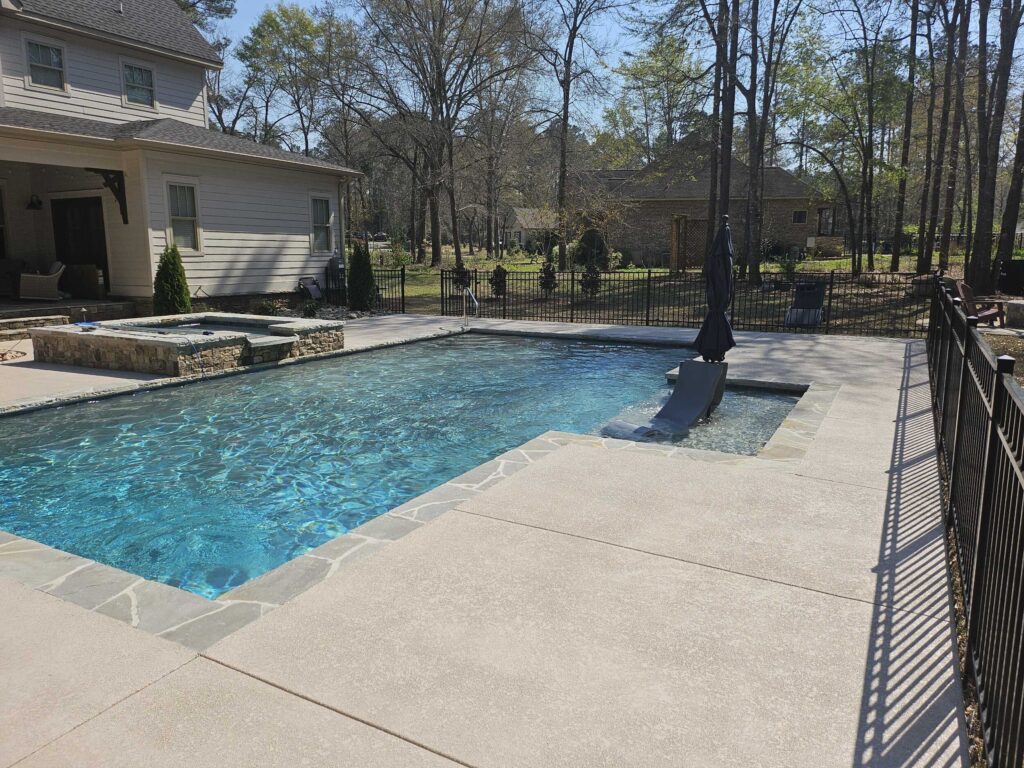
June in Warner Robins hits differently. By the time peak summer arrives, your pool has been through weeks of intense UV exposure, rising water temperatures, and heavy bather traffic. If you are just now getting your pool opened, or if you skipped a few weeks of maintenance and things have gotten away from you, the good news is that a solid summer pool opening is very achievable. The process does require a different mindset than what you would bring to a spring startup, though, and knowing those differences upfront will save you real time and money.
What Makes Summer Pool Opening Unique in Middle Georgia
Georgia summers create conditions that do not exist anywhere else in the pool calendar. Water temperatures inside a covered or idle pool can climb well past 85 degrees Fahrenheit by June, and that heat is not your friend when it comes to water quality. Warm water accelerates every biological process in your pool, which means bacteria multiply faster, algae spores activate more quickly, and chlorine gets consumed at a significantly higher rate than it would in cooler months.
On top of the heat, ultraviolet intensity in Middle Georgia during summer is among the highest of the year. Chlorine that is not protected by a cyanuric acid stabilizer can be rendered ineffective within a few hours of direct sun exposure. This is why two pools with identical chemistry readings can perform very differently depending on how much stabilizer each one carries into summer.
Understanding these two factors, heat and UV, is the foundation of a successful summer pool opening. Everything else in the process flows from that baseline.
Reading Your Pool Before You Do Anything Else
Before you reach for a single chemical or piece of equipment, spend five minutes assessing the actual condition of your water. What you observe will shape your entire approach and prevent you from wasting product on the wrong problem.
Water that is clear but carries a slight blue or green tint is usually signaling early-stage algae growth, and you can address that without an aggressive intervention. Cloudy or milky white water typically points to a pH or calcium imbalance rather than a biological problem, which means shocking it first would be counterproductive. Water that is visibly green and has a noticeable odor tells you that active algae has established itself and you will need a more substantial treatment sequence. Water you cannot see through at all, particularly if the bottom of the pool is not visible, is a situation where professional water testing before anything else is genuinely the right call.
Each of these conditions calls for a different first step. Skipping this visual read and jumping straight into a standard opening routine is one of the most common reasons summer pool openings stall out or get expensive.
The Cover: Getting It Off Without Making Things Worse
Removing a pool cover in summer heat requires a bit more care than it does in March. Debris and organic material that accumulated on the cover over the spring have had weeks in warm temperatures to break down, and anything sitting in pooled water on top of the cover is likely harboring bacterial growth. You want none of that getting into your pool.
Drain surface water from the cover using a submersible pump before you attempt to fold or move it. Slide the cover to one side rather than pulling it back over the water, so that any residual material falls onto the deck rather than into the pool. Once the cover is off the pool, hose it down thoroughly before folding for storage. A cover that goes into storage dirty and damp in summer heat will be unusable by next season.
Circulation First: Why Running Your Equipment Comes Before Chemistry
One of the biggest mistakes in a summer pool opening is adding chemicals to water that is not yet circulating. Chemicals added to stagnant water concentrate in one area of the pool, creating hot spots that can damage surfaces, bleach liners, and produce uneven treatment results.
Before you add anything, get your pump and filter operational. Check your pump basket for debris, verify that all valves are in the correct position, prime the pump if necessary, and confirm that water is flowing through your returns with good pressure. Watch for any drips or wet spots around equipment fittings while the pump is running, since fittings that are fine in cooler months sometimes develop small seeps when heat causes materials to expand and contract over the course of a Georgia summer.
Run your circulation system for a full day before you pull a water sample for testing. This gives the water time to mix thoroughly and gives you a representative sample rather than a reading from one stagnant pocket of the pool.
The Role of Cyanuric Acid in Summer Water Chemistry
Most pool owners think about chlorine, pH, and alkalinity when it comes to water chemistry. Fewer pay attention to cyanuric acid, and that oversight is one of the primary reasons summer chlorine management becomes so frustrating for so many people.
Cyanuric acid, often called CYA or stabilizer, acts as a sunblock for chlorine. Without it present at the right level, the UV radiation in a Georgia summer will destroy free chlorine in your water at a rate that makes it nearly impossible to hold a consistent sanitizer reading. You add chlorine in the morning and it is largely gone by afternoon. You add more, and the same thing happens. This cycle is draining, expensive, and totally preventable.
For outdoor pools in Middle Georgia, a CYA reading between 40 and 60 parts per million gives chlorine the protection it needs to work through a full day of sun exposure. If your CYA has been diluted by heavy rain, evaporation topping, or a partial drain over the spring, bringing it back up to range is often the single change that makes everything else in summer water chemistry fall into place.
This is one reason that bringing a water sample to our team at Mid State Pools before you begin chemical additions is worth your time. A full panel test shows you exactly where CYA stands so you are not guessing, and we will walk you through the specific additions your pool actually needs rather than a generic starting point.
Addressing Calcium and Evaporation in Peak Summer Heat
Georgia summers are tough on water volume. Between direct evaporation from heat, splash-out during active use, and backwashing your filter, a pool can lose several inches of water per week during the hottest stretch of the season. Each time you top off with fresh water, you are diluting whatever is in the pool, including your stabilizer, your calcium hardness, and your other balancing chemicals.
Calcium hardness deserves specific attention in summer because it tends to behave in ways that surprise people. In pools that are losing and replacing a lot of water, calcium levels can swing in either direction depending on the mineral content of your fill water. Low calcium hardness causes water to become aggressive and corrosive, attacking your plaster, grout, and equipment components. High calcium hardness produces scale deposits on your surfaces and cloudy water that resists clarification no matter how much product you add.
Neither problem responds well to generic treatment. Testing your calcium level specifically, which is part of our free water test at the store, tells you whether you need to add a hardness increaser, partially drain and refill, or simply continue monitoring.
Shock Timing: Why Evening Applications Matter in Summer
Shocking your pool is part of most opening protocols, but the time of day you apply shock products makes a significant difference in summer that it does not make in spring or fall. Chlorine-based shock applied to pool water during peak daylight hours is immediately exposed to the same UV radiation that degrades your regular chlorine. A portion of the product is effectively wasted before it has a chance to do its job.
Apply shock products in the early evening, after the sun has dropped below your fence line or structure. This gives the chlorine several hours of low-UV or dark conditions to circulate and work through the water before the next day of sun exposure begins. You will see noticeably better results from the same product used at the right time.
For a summer opening where significant algae treatment is required, you may need to repeat shock applications on back-to-back evenings. Retest after each 24-hour period rather than adding product again without checking, since over-shocking can spike chlorine to levels that irritate swimmers and degrade certain types of pool finishes.
Ongoing Summer Maintenance After You Open
Getting through a summer pool opening is genuinely the easy part. Keeping a pool balanced through July and August in Middle Georgia takes consistent attention, and the pools that struggle most are the ones where owners apply a spring maintenance schedule to a summer pool.
In June, July, and August, your filtration system should run longer daily cycles than it did in spring. The combination of higher bather loads, more organic debris, and greater chemical demand means your filter has significantly more work to do. Extending run time, cleaning filter media more frequently, and checking basket screens regularly will help your system keep up.
Water testing frequency matters too. Chemistry that holds steady for five or six days in April can shift in two or three days during a heat wave in July. Testing more often, even just a quick chlorine and pH check every other day, lets you make small adjustments before they become large problems. Catching drift early is always faster and less expensive than treating a pool that has gone sideways over a full week.
If you want a concrete plan built around your specific pool size, usage patterns, and equipment, our team at Mid State Pools can help you put one together. Stop by the showroom at 540 S. Houston Lake Rd. in Warner Robins, bring a water sample, and we will give you a clear picture of where your pool stands and what it needs to perform at its best through the rest of the summer season.
Get Your Pool Summer-Ready with Mid State Pools
Mid State Pools and Spas has served Middle Georgia pool owners since 1988. We carry the chemicals, equipment, and expertise that Warner Robins families rely on to get more out of every swim season. Whether you need a full summer opening, a specific water chemistry solution, or just a reliable source for supplies, we are here to help.
Free water testing is available year-round with no appointment required. Give us a call at 478-953-7300 or visit us at 540 S. Houston Lake Rd. in Warner Robins. Summer goes fast, and the sooner your pool is right, the more of it you get to enjoy.
